
Tuna Buying Guide: Sashimi Block vs Steak, and How to Tell Them Apart
Tuna Buying Guide: Sashimi Block vs Steak, and How to Tell Them Apart
TL;DR: A sashimi block is trimmed and handled for raw service. A steak is for cooking. They are different products at different prices, and swapping one for the other is the mistake people make most. Cook tuna hot, fast, and stop while the middle is still rosy.
Tuna is the fish people most often buy wrong. Not because they pick a bad piece, but because they pick the right piece for the wrong job. The block and the steak sit next to each other in the cabinet, both red, both firm, and the difference between them is entirely in how they were handled before they got there.
The block and the steak
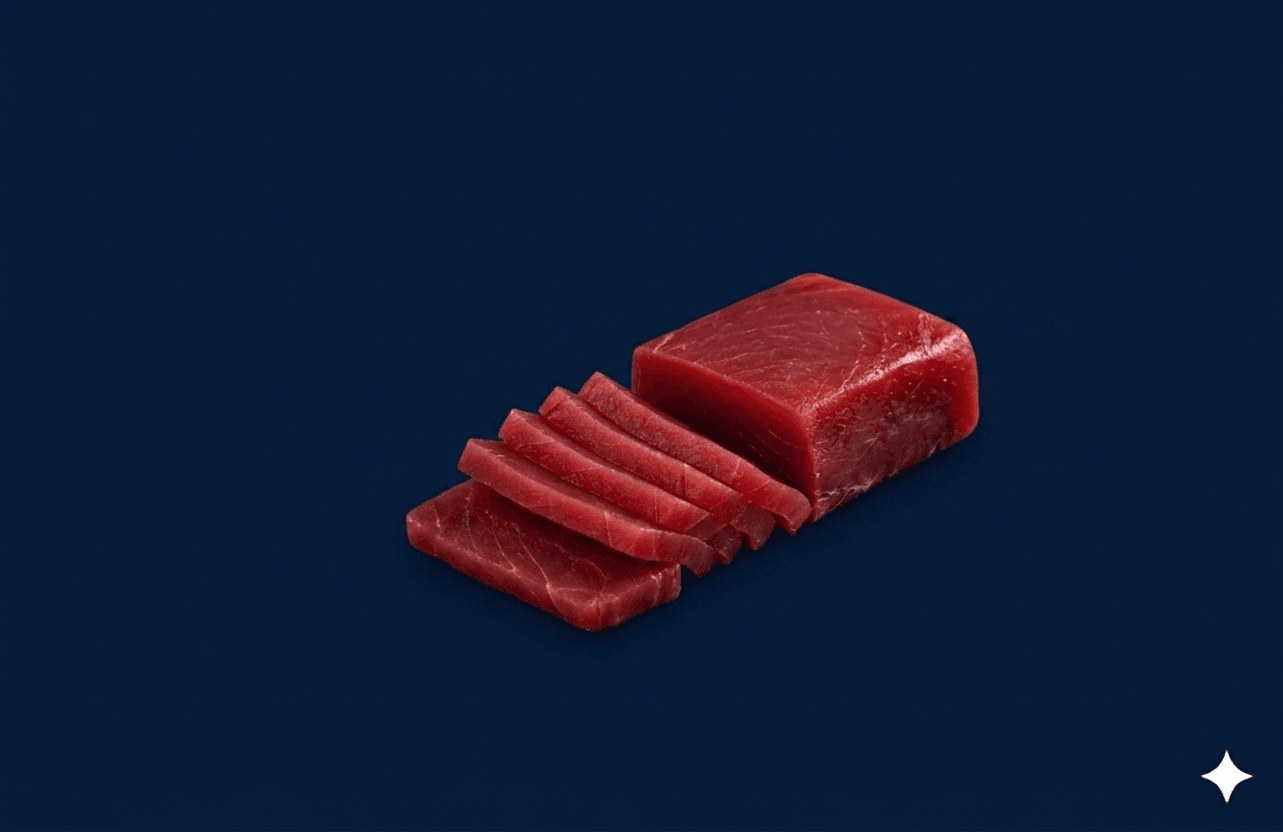
A sashimi block is cut from the loin of the fish. The bloodline is removed, the sinew is trimmed, and it is kept and handled to a standard that allows it to be eaten raw. It comes as a rectangular log because that shape lets you slice clean, even pieces across the grain. Ours run 200 grams, which is a sensible amount for two people as a starter.
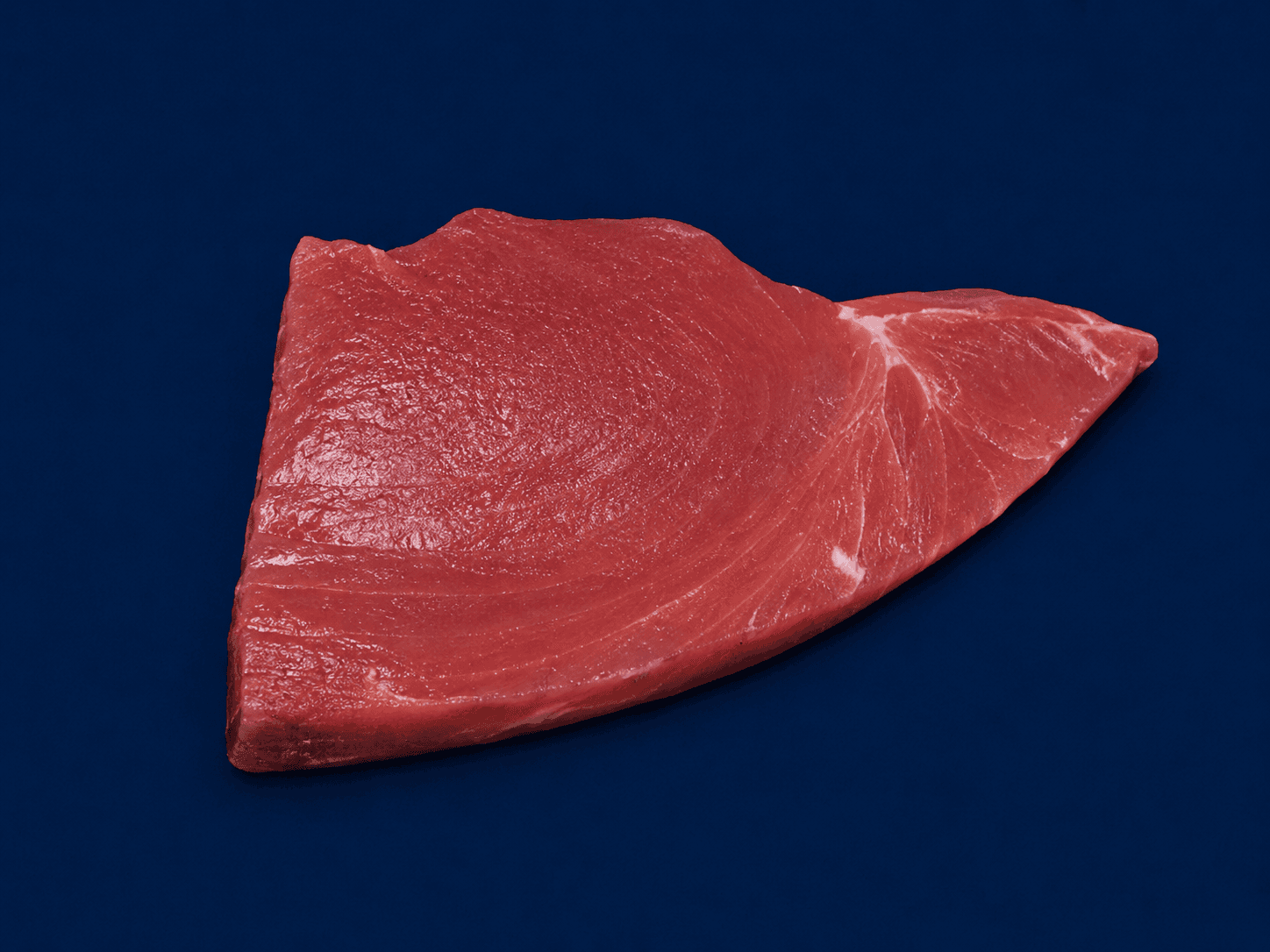
A tuna steak is a cross section cut for the pan or the grill. It has not been prepared for raw service. It is a perfectly good piece of fish, and it costs less, because it has not had the trimming and handling that the block has.
The practical rule: if it is going in a pan, buy the steak. If it is going on a plate raw, buy the block.
We carry both yellowfin sashimi blocks and kingfish and salmon blocks, plus tuna steaks for cooking.
What actually tells you a piece of tuna is good
Most advice about tuna is about colour, and colour is the least reliable signal there is. Some tuna is treated with carbon monoxide, which locks in a bright cherry red that will not fade even as the fish ages. A piece that looks vivid is not necessarily fresher than one that looks darker.
Look at these instead.
- Translucency. Good tuna has a slight glassy depth to it. Tuna that has aged goes flat and opaque.
- Texture. Press it gently. It should be firm and spring back. A soft, mushy patch means the flesh has started to break down.
- The cut surface. It should be smooth and slightly wet, not weeping liquid into the tray and not dried and tacky at the edges.
- The smell. Clean, faintly of the sea, nothing more. Tuna that smells sour or metallic is done.
- Rainbow sheen. A faint iridescence on the cut face is normal and is just light refracting off the muscle fibres. It is not a fault.
Yellowfin, and what else you might see
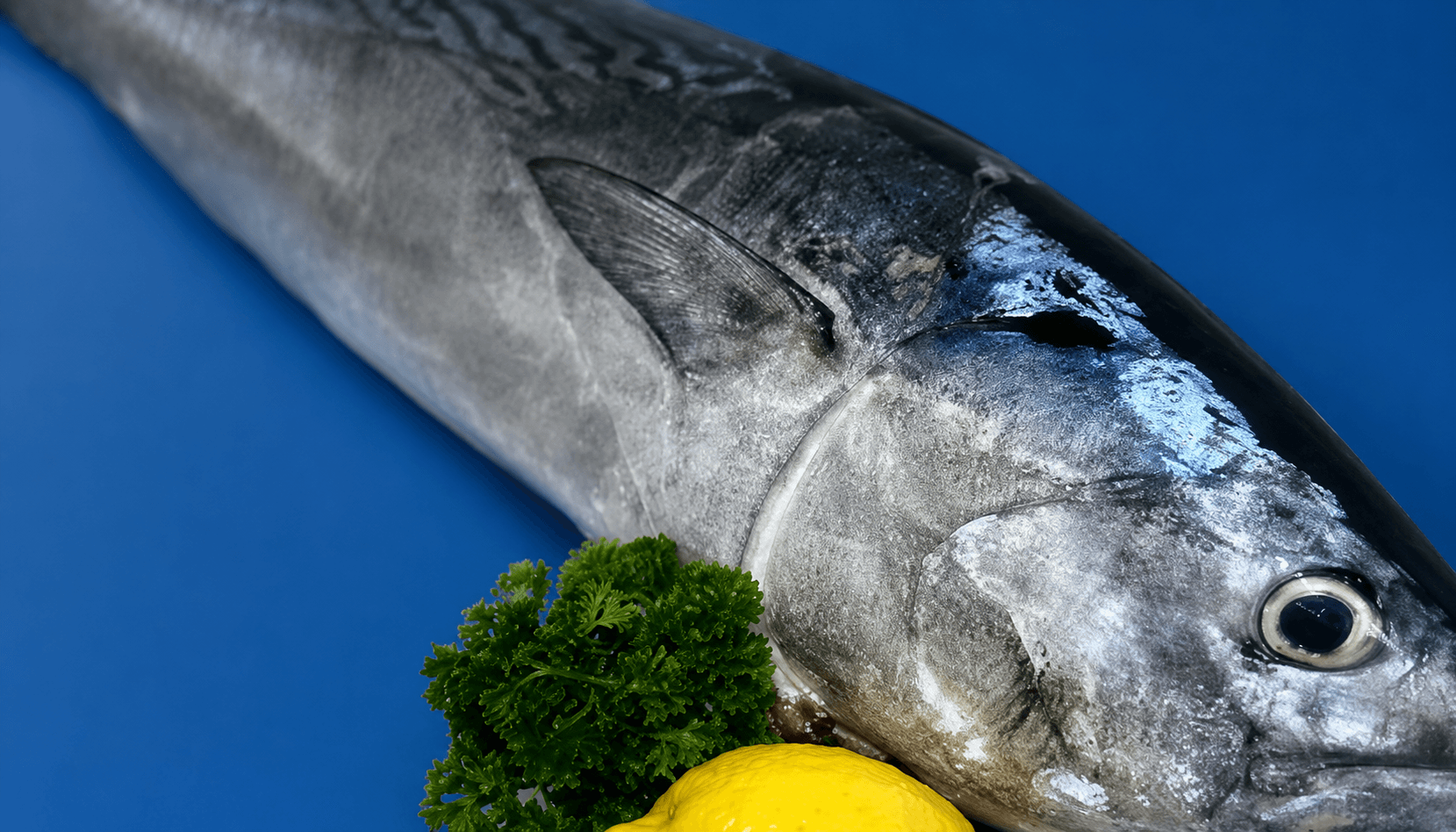
Yellowfin is the tuna you will see most on the Gold Coast. Deep red, lean, clean flavoured, and the standard for sashimi, poke bowls and tataki. It is a good all rounder because it is excellent raw and holds up to a hard sear.
Tuna tail cuts are the value option. The tail end of the fish has more sinew running through it, so it is not a sashimi cut, but diced and marinated it makes excellent poke, ceviche, tuna skewers and curry.
Swordfish, while not tuna, sits in the same part of the counter and answers the same brief when you want a firm, meaty steak. It carries more fat than tuna, so it is more forgiving on the grill.
How to cook tuna properly
Tuna is one of the leanest things in the shop. There is almost no intramuscular fat to keep it moist, which is exactly why overcooked tuna is so dry and grey and why so many people think they do not like it.
Treat it like a rare steak.
- Take the fish out of the fridge 15 minutes before cooking so the centre is not fridge cold.
- Pat it completely dry and season with salt just before it hits the heat.
- Oil the fish, not the pan. This stops the oil smoking before the fish is in it.
- Get the pan or grill genuinely hot. Smoking hot, not medium.
- Sear 60 to 90 seconds per side for a piece around 2.5 centimetres thick.
- Rest it for two minutes, then slice across the grain.
The centre should be rosy and cool. That is not undercooked tuna, that is correctly cooked tuna.
If you want it fully cooked, do not buy a steak. Buy something with fat in it that will survive the treatment.
Slicing a sashimi block
Slicing is where home sashimi usually falls down, and it is a technique problem rather than an ingredient problem.
- Chill the block well. Cold fish slices cleanly, room temperature fish tears.
- Use your sharpest knife, and a long one if you have it.
- Cut across the grain, at a slight angle, in one single pulling stroke. Do not saw.
- Aim for slices around 5 to 8 millimetres thick.
- Wipe the blade between cuts.
If the block has an obvious sinew line running through it, cut around it rather than through it. Sinew does not soften and it will make an otherwise good slice chewy.
What to do with tuna beyond sashimi
Tataki. Sear the outside of a block for 20 seconds a face, plunge into iced water, dry, and slice. You get a cooked crust and a raw centre.
Poke. Dice the block into 2 centimetre cubes, dress with soy, sesame oil, a little rice vinegar and spring onion, and serve over rice.
Ceviche. Tuna works, though a firmer white fish holds up better to the acid over time.
Skewers. Cubes of tuna tail, marinated and grilled hard and fast, are excellent and cheap.
Quantity Planning
Sashimi as a starter: 80 to 100 grams of block per person, so a 200 gram block serves two. Sashimi as a main or a shared platter: 150 grams a head. Tuna steak as a main: 180 to 200 grams per adult. Poke bowl: 120 to 150 grams per bowl, since the rice and vegetables carry the volume.
Where to Source It
Tasman Star runs yellowfin tuna sashimi blocks, salmon and kingfish blocks, fresh tuna steaks, tuna tail cuts and swordfish steaks. If you are unsure which one your dish needs, tell the team at the counter what you are cooking and they will point you at the right cut rather than the dearest one.
Find us at 5 to 7 Olsen Ave, Labrador or 20 Casua Dr, Varsity Lakes, open 7 AM to 6 PM, 7 days.
Browse tuna and sashimi blocks and order online for Gold Coast delivery.
Shop this recipe
Everything below is stocked fresh and delivers across the Gold Coast.
Written by
The Tasman Star Team · Gold Coast fishmongers
Articles from the fishmongers at Tasman Star Seafood. We source, fillet and sell fresh seafood on the Gold Coast seven days a week, and everything we publish comes from what we handle in the shop.
Fresh seafood delivered to your door
Order online from Tasman Star Seafood, Gold Coast delivery, open 7 days.
More Seafood Articles
Caviar vs Salmon Roe vs Tobiko: What Australians Are Actually Buying
True caviar is salted sturgeon eggs. Salmon roe, tobiko and masago are different fish eggs at different prices. A Gold Coast fishmonger's table of grain size, flavour and use.
Buying GuidesLobster vs Crayfish vs Moreton Bay Bug: What Is the Difference
In Australia, crayfish is usually rock lobster. Moreton Bay bugs are slipper lobsters. True freshwater crayfish are yabbies. A Gold Coast comparison of taste, meat, price and how to cook each.
Buying GuidesHot Smoked, Cold Smoked and Candied Salmon: What Is the Difference
Cold smoked salmon is silky and raw-cured. Hot smoked is flaky and cooked. Candied salmon is hot smoked with a sweet glaze. Shelf life, texture and how to serve each.