
How to Barbecue a Whole Fish Without It Sticking
How to Barbecue a Whole Fish Without It Sticking
TL;DR: Clean grill, hot grill, dry fish, oil on both. Score the shoulders, stuff the cavity, lay it down and do not touch it for eight to ten minutes. Turn once with two spatulas. Done when the flesh lifts off the backbone.
A whole fish over coals is the best thing you can put on a Gold Coast barbecue. It feeds a table, it costs less per person than fillets, and it looks like you know what you are doing.
The only thing standing between you and that is the fear of the skin welding itself to the bars and the fish coming apart when you try to turn it. That is a solvable problem, and it comes down to four things done at the same time.
The four rules that stop it sticking
Miss any one of these and you will lose skin. Do all four and the fish releases itself.
- A clean grill. Old carbonised residue is what fish glues itself to. Get the barbecue hot, scrub the bars hard with a wire brush, then wipe them.
- A fully preheated grill. Cold bars grip. Give the barbecue a solid 10 minutes with the lid down before the fish goes near it.
- A completely dry fish. Blot it inside and out with paper towel. Moisture on the skin means it steams instead of searing, and unseared skin sticks.
- Oil on both. Brush the fish with a neutral high smoke point oil such as rice bran or canola, then wipe the hot bars with an oiled rag held in tongs.
Then the fifth rule, which is not about equipment: leave it alone. Almost every stuck fish was moved too early.
Preparing the fish
Ask the counter to scale and gut it. They will do it in a minute and it saves you a mess. Keep the head on. It holds the fish together, it protects the meat behind it, and the cheeks are the best bites on the whole animal.
Score the shoulders. This is the step most people skip and it is the one that makes the difference between evenly cooked and half raw. The shoulder of a round fish is far thicker than the belly, so it needs help. Cut three diagonal slashes into each side of the thick part, right down to the bone.
Season generously, inside and out. Salt the skin, salt the cavity. Fish needs more salt than people expect.
Fill the cavity. Lemon slices, a bunch of parsley or coriander stalks, a few slices of ginger, a smashed garlic clove or two. The cavity steams as the fish cooks and perfumes the flesh from the inside. Do not pack it tight, because steam needs room to move.
Cooking it
Set the barbecue up for medium heat. If you have a lid, use it, because the fish cooks from all sides rather than just underneath and you halve the amount of turning.
If you are on charcoal, bank the coals to one side so you have a cooler zone to move the fish to if it colours too fast.
- Lay the fish down across the bars rather than along them, so it is easier to get spatulas underneath.
- Close the lid.
- 8 to 10 minutes untouched. Do not lift it, do not peek at the underside.
- Test by nudging with a spatula. If it slides, it is ready to turn. If it grips, close the lid and give it another minute.
Turning. Use two wide spatulas, one under the head end and one under the tail end, and lift and flip in a single confident movement. Hesitation is what breaks fish. If you have a hinged fish basket, this is what it is for and it makes the whole thing trivial.
Second side is usually a little quicker, around 8 minutes.
Total time for a 1.5 kilogram fish is around 20 to 25 minutes. As a general rule, allow about 10 minutes per 500 grams.
Knowing when it is cooked
Forget timers. Slide a small knife into the deepest scored cut, right at the shoulder, and lever gently.
- The flesh lifts cleanly away from the backbone: done.
- The flesh clings and looks glassy: not yet.
The other tell is the eye, which turns opaque white, and the dorsal fin, which pulls out easily with a light tug when the fish is ready.
Rest it for five minutes before it goes to the table. It carries on cooking a little and the flesh firms up enough to serve neatly.
Serving it at the table
Do not try to plate it in the kitchen. Carry the whole fish out on a board or platter and let people see it.
To serve: run a knife down the spine and lift the top fillet off in sections. Once that side is clear, lift the head and backbone away in one piece, and the bottom fillet is left clean underneath. Do not flip the fish over.
Claim the cheeks. Two small nuggets of meat behind the eye, and the best thing on the plate.
Which fish to buy
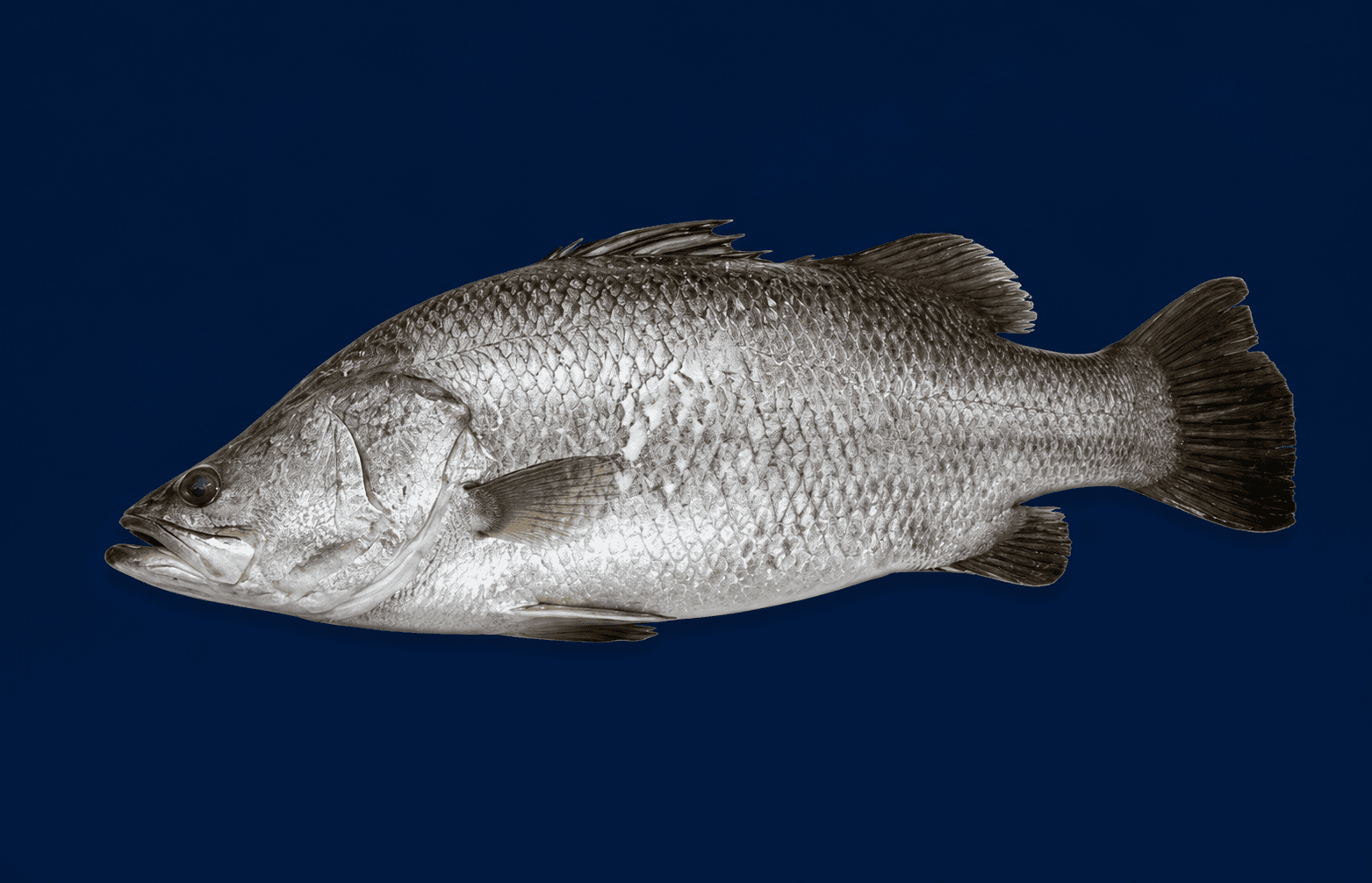
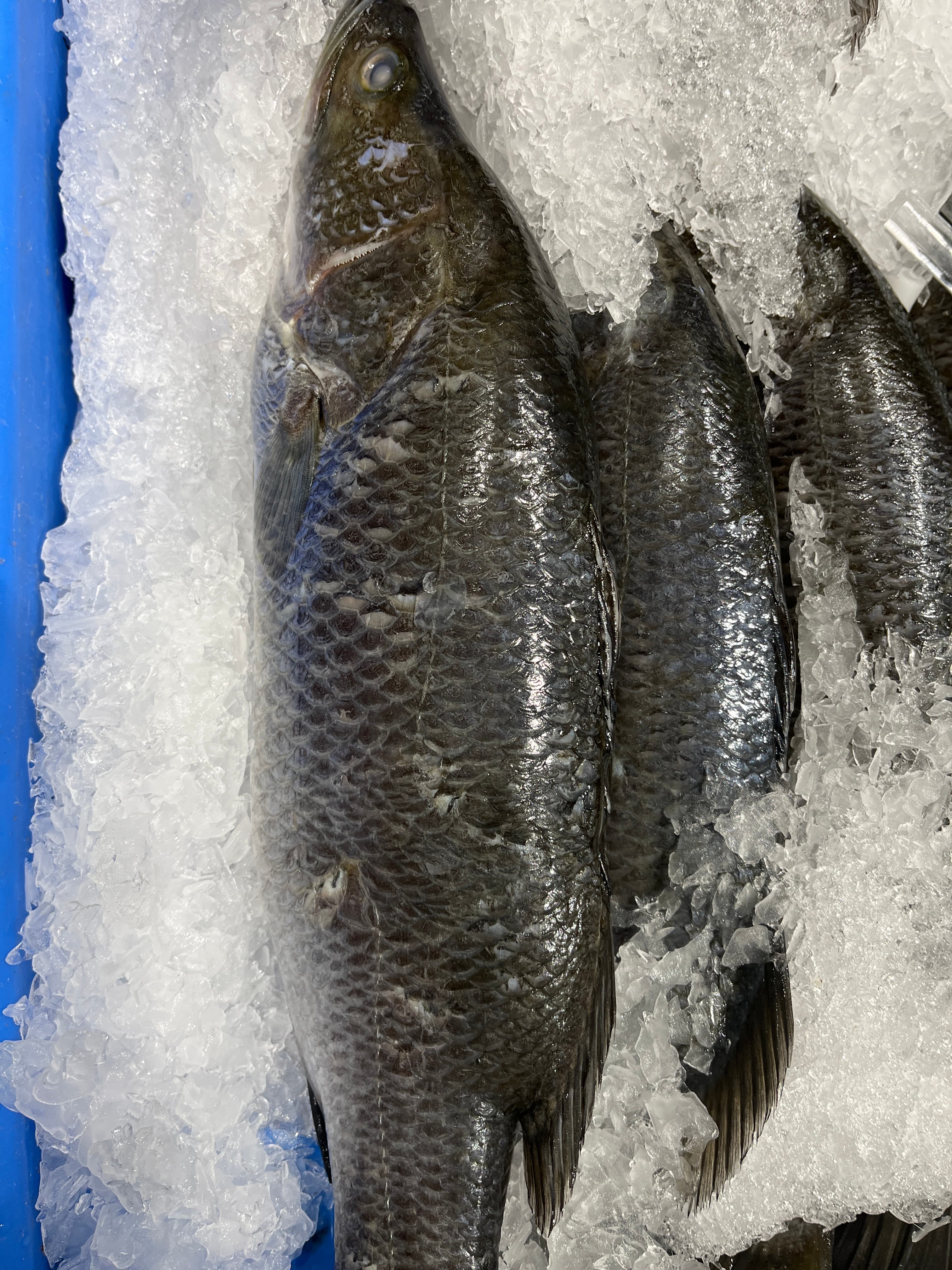
- Barramundi is the Queensland default. Firm flesh, tough skin, very hard to break. Start here.
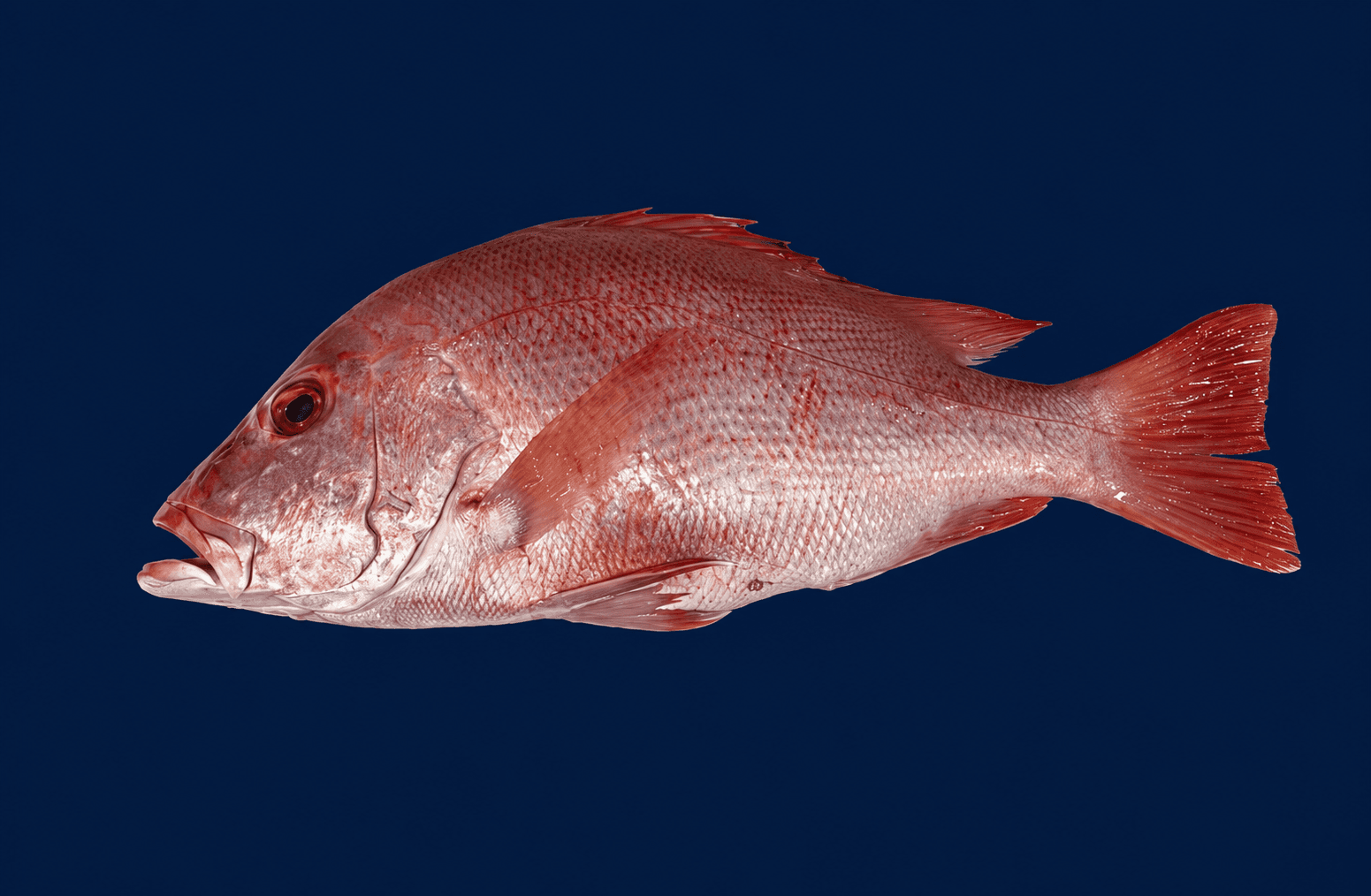
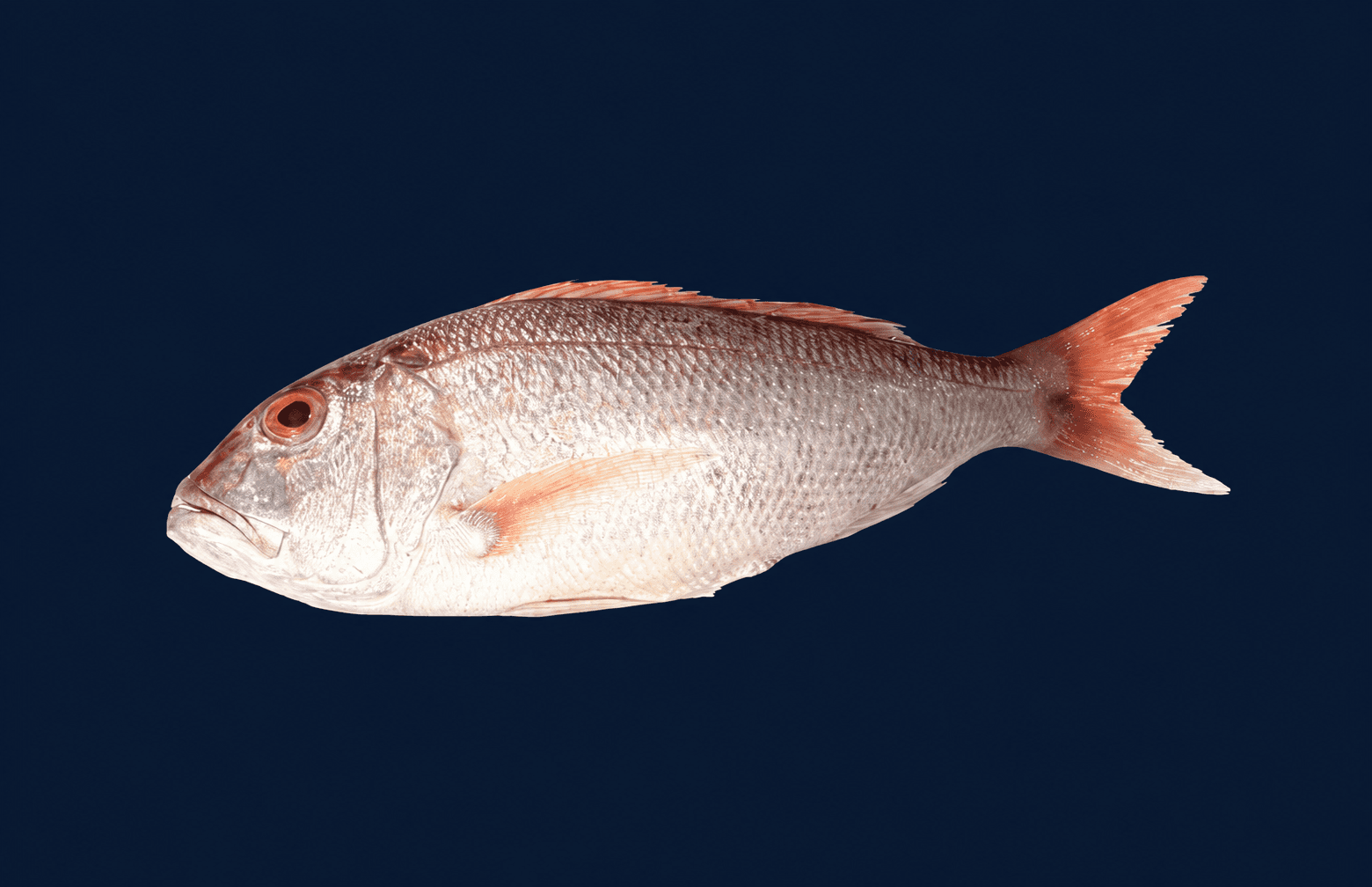
- Snapper is the classic. Sweet, flakes beautifully, holds together well.
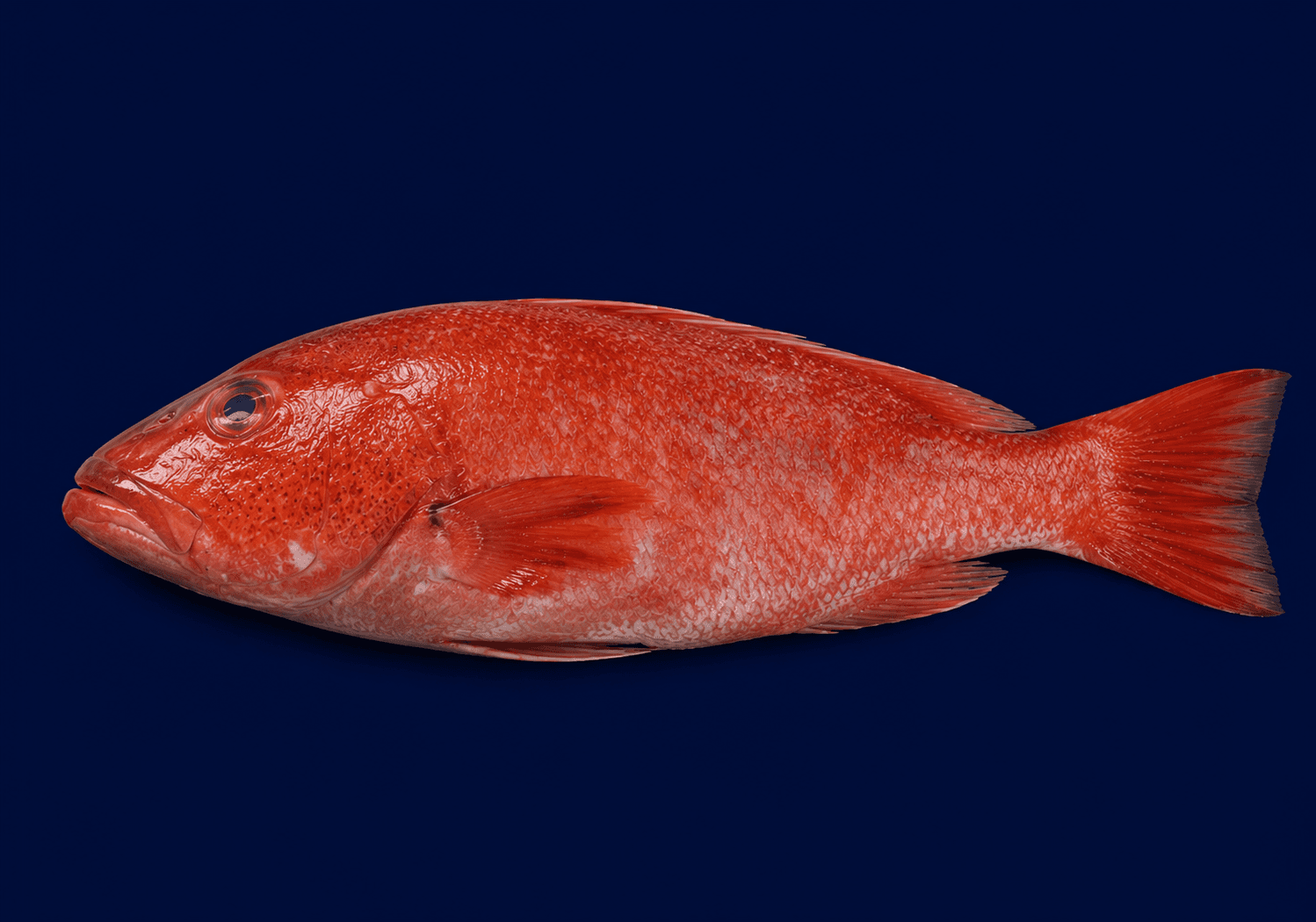
- Coral trout is the special occasion fish and superb over coals.
- Red emperor is a big meaty centrepiece for a crowd.
- Silver bream and golden pomfret are the value picks for a weeknight.
Size matters more than species. A fish between 1 and 2 kilograms is the sweet spot: big enough to feed people, small enough to turn and to cook evenly. For eight people, grill two fish at 1.5 kilograms rather than one at 3 kilograms.
Quantity Planning
Whole fish, main course: 400 to 500 grams per adult. Whole fish as part of a bigger barbecue with prawns and salads: 300 grams a head.
A 1.5 kilogram fish feeds three to four. A 2 kilogram fish feeds five.
Where to Source It
Tasman Star runs whole barramundi, snapper, coral trout, red emperor, silver bream and golden pomfret through the counter fresh. Tell the team it is going on the barbecue and they will scale it, gut it and score the shoulders for you, which is the part most people get wrong at home.
Find us at 5 to 7 Olsen Ave, Labrador or 20 Casua Dr, Varsity Lakes, open 7 AM to 6 PM, 7 days.
Shop this recipe
Everything below is stocked fresh and delivers across the Gold Coast.
Written by
The Tasman Star Team · Gold Coast fishmongers
Articles from the fishmongers at Tasman Star Seafood. We source, fillet and sell fresh seafood on the Gold Coast seven days a week, and everything we publish comes from what we handle in the shop.
Fresh seafood delivered to your door
Order online from Tasman Star Seafood, Gold Coast delivery, open 7 days.
More Seafood Articles
How to Cook King Crab Clusters at Home
Most king crab clusters sold in Australia are already cooked and frozen. You are reheating, not boiling from raw. Steam, bake or grill by weight so the meat stays sweet.
Cooking & PreparationSnapper in Australia: Which One You Have and How to Cook It
Pink snapper, red snapper, gold band and knobby snapper are not the same fish. A Gold Coast cook-time table for whole snapper and 300 g portions, plus which name is on the ticket.
Cooking & PreparationHow to Cook Crispy Skin Fish in a Pan Every Time
Crispy skin is a technique, not luck. Dry the skin, use a hot pan, press it flat and leave it alone. Here is the method that works on barramundi and snapper.