
How to Choose Fresh Fish: A Gold Coast Local's Guide
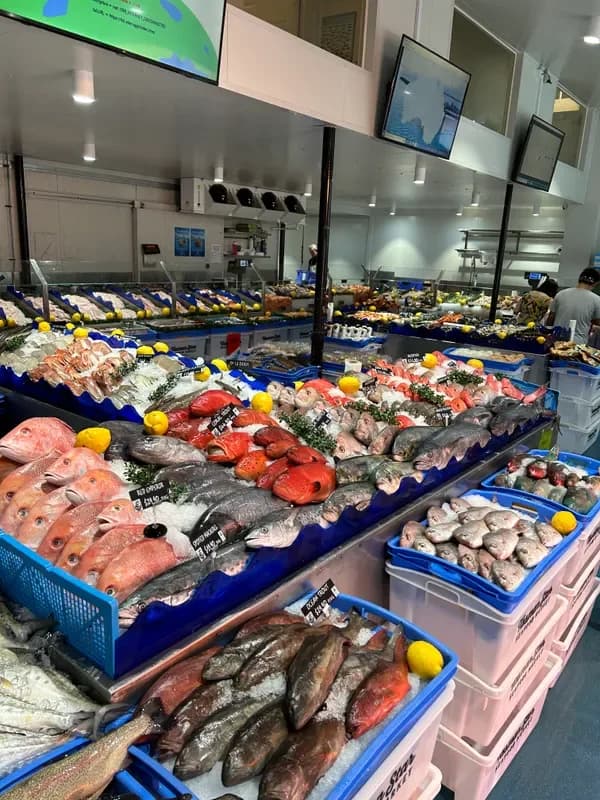
How to Choose Fresh Fish: A Gold Coast Local's Guide
TL;DR: Fresh fish has clear bulging eyes, bright red gills, firm springy flesh, and smells like clean ocean water, not like fish.
Check the Eyes First
The eyes tell you more about a fish's age than any other single indicator. On a fresh fish, the eyes are bright, clear, and slightly convex, pushing outward against the socket. As the fish ages, the eyes turn milky, then cloudy, then begin to sink inward. Sunken, opaque eyes mean the fish has been out of the water for too long, regardless of what the display ice suggests.
This check takes one second and works on any whole fish: snapper, coral trout, barramundi, bream. If the eyes fail, move on.
Lift the Gill Cover
Reach under the operculum (the bony flap behind the head) and look at the gills. Fresh gills are a saturated red or bright pink, moist, and clean-smelling. Within 24 hours of being caught, the colour begins to fade toward pale pink, then brown, then grey. Slimy, grey-brown gills are a hard pass: that fish is several days old.
The gills are the fishmonger's open secret. A fish can be washed, iced, and displayed beautifully, but the gills don't lie.
Press the Flesh
Apply gentle finger pressure to the thickest part of a fillet or the body of a whole fish. On fresh fish, the flesh rebounds immediately: the cells are intact and full of moisture. If your fingerprint lingers for more than a second, or the flesh feels soft and waterlogged, the protein structure has started to break down. For fillets, also check the cut edge: it should look translucent and moist, not dry, white, or gaping at the muscle seams.
Gaping is when the natural flesh layers start to separate. It happens as fish age and is impossible to fake away.
Trust Your Nose Above Everything
Fresh fish smells of the sea: clean, briny, faintly mineral. It does not smell "fishy." That sharp, pungent odour comes from trimethylamine, a compound produced by bacteria as they break down the flesh. If you can smell it before you open the packaging, the fish is already compromised. Ammonia is a further stage of degradation. That smell means discard immediately.
A genuine fishmonger's display smells like cold ocean air. If a seafood counter smells strongly of fish, it is telling you something.
Look at the Skin and Scales
On whole fish, the skin should be shiny and iridescent, almost metallic. The scales should cling tightly; try running a finger against the grain. Loose scales, dull or chalky skin, and dried-out patches all signal age. On fillets, the skin side should glisten and the flesh should look translucent or pale ivory, depending on the species. White, opaque, or yellowish flesh on a raw fillet is a warning sign.
For flat fish like flounder or sole, check that the dark upper skin is still vibrant and the lateral line (the faint stripe running down the body) is clearly defined.
Buy Where You Know the Source
All five tests become easier when you buy from a fishmonger who can tell you exactly when the fish was caught and where. At Tasman Star Seafood, our stores at Labrador (5–7 Olsen Ave) and Varsity Lakes (20 Casua Dr) receive daily deliveries direct from our own commercial trawler fleet operating in Moreton Bay and beyond. Our staff can answer the provenance question before you even ask.
Browse our fresh fish range. We are open 7 days from 7 AM.
Written by
The Tasman Star Team · Gold Coast fishmongers
Articles from the fishmongers at Tasman Star Seafood. We source, fillet and sell fresh seafood on the Gold Coast seven days a week, and everything we publish comes from what we handle in the shop.
Fresh seafood delivered to your door
Order fresh fish online from Tasman Star Seafood, Gold Coast delivery, open 7 days.
More Seafood Articles
How to Build a Seafood Platter for 2, 4, 6, 10 or 20 People
Seafood platter quantities that actually work: grams per person, a shopping list for 2 to 20 guests, and how a $200 Father's Day spend unlocks free merch online or in store.
GuidesIs Flake Shark? What Australian Fish and Chip Shops Actually Sell
Yes. Flake is shark, usually gummy shark. It is mild, boneless and common in fish and chips. Here is the species table, the mercury note, and what to cook instead.
GuidesWhat Is Mullet Roe? Bottarga, Fresh Roe and How Australians Eat It
Mullet roe is the egg sack of sea mullet. Fresh, it fries crisp. Cured, it is bottarga. Same fish as Mediterranean grey mullet. A Gold Coast guide to buying, curing and cooking it.