
How to Clean Octopus (Step-by-Step with Video)
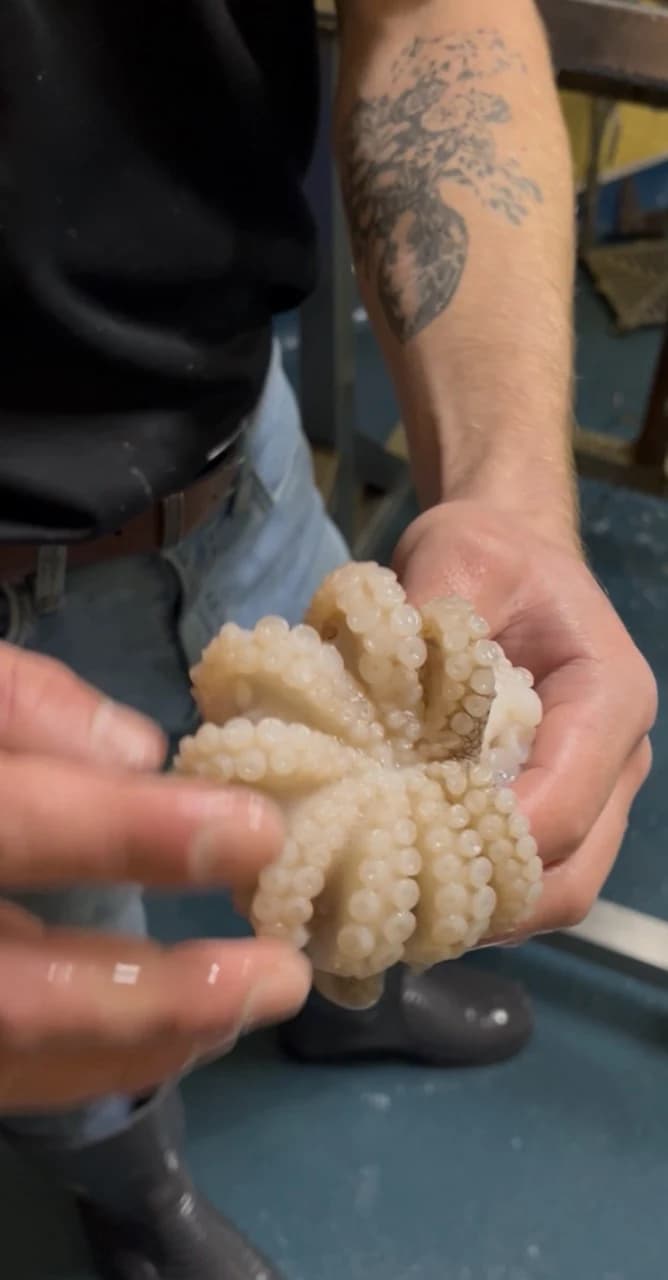
Quick answer: Rinse the octopus, then turn the head inside out and pull out all the innards (and the ink sac). Push the hard beak out from the centre where the legs meet and discard it. Cut out the eyes. Keep or remove the head as your recipe needs. Rinse well. It's ready to tenderise and cook. The whole job takes about 10 minutes.
Key facts:
- Turn the head (body sac) inside out and pull out all the innards and ink sac
- The hard beak is in the centre underneath, where all eight legs join. Push it out and discard
- Cut out and discard the two eyes
- The skin is edible and normally left on
- The head is edible. Keep it for braising, or cut it away and cook just the legs
- Clean octopus raw, before cooking; the tenderising simmer comes after
- Cleaning takes about 10 minutes
Watch: Cleaning an Octopus
The fastest way to learn is to see it. Here's the whole process start to finish:
What You'll Need
- A sharp knife
- A board
- A bowl for the bits you're discarding
- Cold running water
Step-by-Step: Cleaning a Whole Octopus
1. Rinse it well
Give the whole octopus a good rinse under cold running water to wash off any surface grit or slime.
2. Clean out the head
The head is the round, bulbous sac (it's actually the body; the "head" with the eyes sits between it and the legs). Turn it inside out like a sock and pull away all the innards: the digestive organs and the ink sac. If you want to save the ink, lift the sac out whole without bursting it; otherwise discard it all. Rinse the cavity until it's clean, then turn it back the right way.
3. Remove the beak
Turn the octopus so the underside of the legs faces up. Right in the centre, where all eight legs join, is a hard, parrot-like beak. Press around the centre from the inside to push it out, then pinch it and pull it free. Discard it: it's inedible.
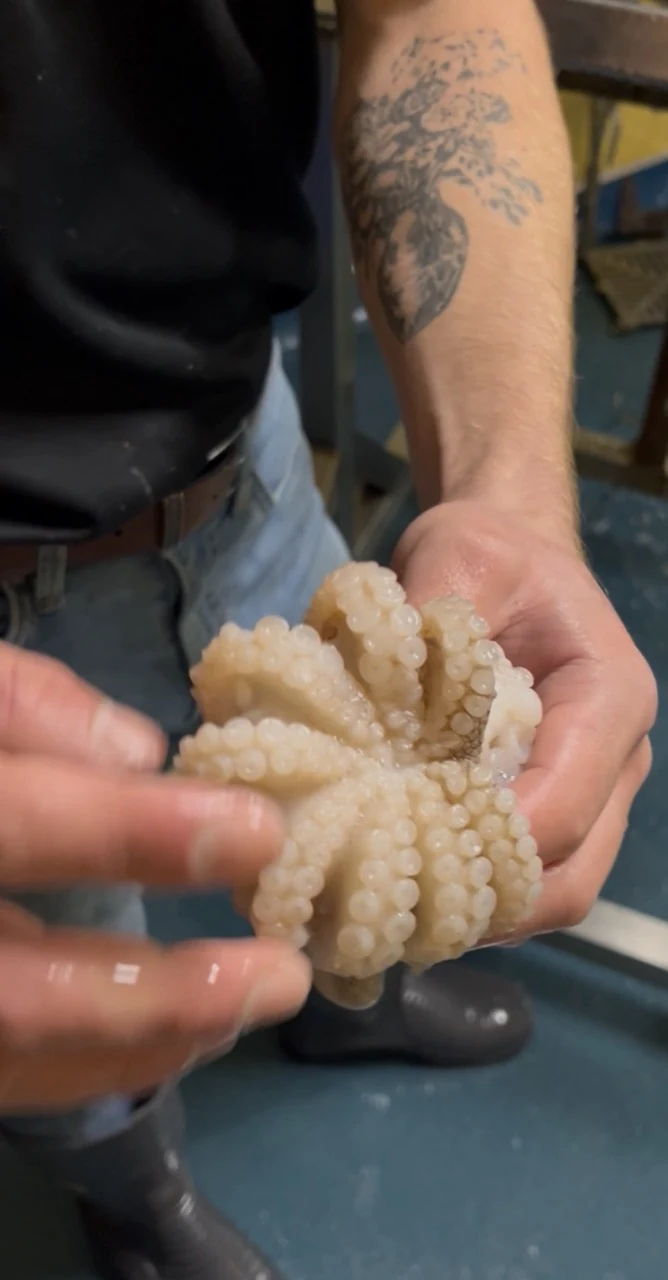
4. Remove the eyes
Find the eyes on the head section between the body sac and the legs. Cut them out with the tip of your knife and discard.
5. Keep or remove the head
The cleaned head is edible and lovely braised. Either leave it attached, or cut it away from the legs if your recipe just wants the tentacles.
6. Final rinse
Rinse the legs and head once more. Your octopus is now clean and ready to tenderise and cook.
Next: Tenderise It
Octopus muscle is tough until it's properly cooked. After cleaning, the classic method is:
- Simmer gently in water for 45–60 minutes, until a skewer slides easily into the thickest part of a leg.
- Finish on the grill or in a hot pan for char and flavour.
Other tricks: freezing then thawing the octopus before cooking helps break down the fibres (ice crystals do the work), and baby octopus is naturally tender and only needs quick, hot cooking.
For the full cooking method, see how to cook tender calamari (the same fast-or-slow principle applies to octopus) and octopus vs squid vs cuttlefish.
Prefer It Cleaned and Ready?
Cleaning octopus is satisfying, but you can skip straight to cooking. Tasman Star sells:
- Whole octopus: fresh and frozen, to clean yourself
- Baby octopus: cleaned, tender, ready to grill or stir-fry
- Blanched and cooked octopus: ready to slice and finish
Browse squid, octopus & cuttlefish at Tasman Star →
Buying Octopus on the Gold Coast
Tasman Star Seafood stocks octopus (whole, baby, and cooked) at both stores:
- Varsity Lakes: 20 Casua Dr, (07) 5522 1221
- Labrador: 5–7 Olsen Ave, (07) 5529 2500
Gold Coast home delivery runs 7 days a week.
→ Next: octopus vs squid vs cuttlefish · how to cook tender calamari
Written by
The Tasman Star Team · Gold Coast fishmongers
Articles from the fishmongers at Tasman Star Seafood. We source, fillet and sell fresh seafood on the Gold Coast seven days a week, sharing seafood buying guides, cooking ideas and practical information for our customers.
Fresh seafood delivered to your door
Order octopus online from Tasman Star Seafood, Gold Coast delivery Monday to Saturday.
More Seafood Articles
How to Build a Seafood Platter for 2, 4, 6, 10 or 20 People
Seafood platter quantities that actually work: grams per person, a shopping list for 2 to 20 guests, and how a $200 Father's Day spend unlocks free merch online or in store.
GuidesIs Flake Shark? What Australian Fish and Chip Shops Actually Sell
Yes. Flake is shark, usually gummy shark. It is mild, boneless and common in fish and chips. Here is the species table, the mercury note, and what to cook instead.
GuidesWhat Is Mullet Roe? Bottarga, Fresh Roe and How Australians Eat It
Mullet roe is the egg sack of sea mullet. Fresh, it fries crisp. Cured, it is bottarga. Same fish as Mediterranean grey mullet. A Gold Coast guide to buying, curing and cooking it.