
Sustainable Seafood in 2026: What Gold Coast Buyers Care About Most
TL;DR: Most commonly eaten Australian seafood is well-managed under federal and state frameworks, but knowing which species to ask about, and why supply chain length matters, lets you buy with genuine confidence.
What Sustainable Seafood Actually Means in Australia
Sustainability in seafood has two distinct dimensions that often get conflated. The first is stock health: whether a species is being harvested faster than it can reproduce. The second is environmental impact: the method of catch and whether it damages habitat or creates significant bycatch.
Australia's regulatory framework is among the most rigorous in the world. The Australian Bureau of Agricultural and Resource Economics and Sciences (ABARES) publishes the Status of Australian Fish Stocks report annually, assessing commercial species against defined sustainability criteria. The Australian Fisheries Management Authority (AFMA) enforces catch limits on Commonwealth-managed fisheries. Most species Australians eat regularly (barramundi, snapper, flathead, prawns, salmon, and oysters) are sustainably managed under these frameworks.
Wild-Caught vs Farmed: Both Can Be Sustainable
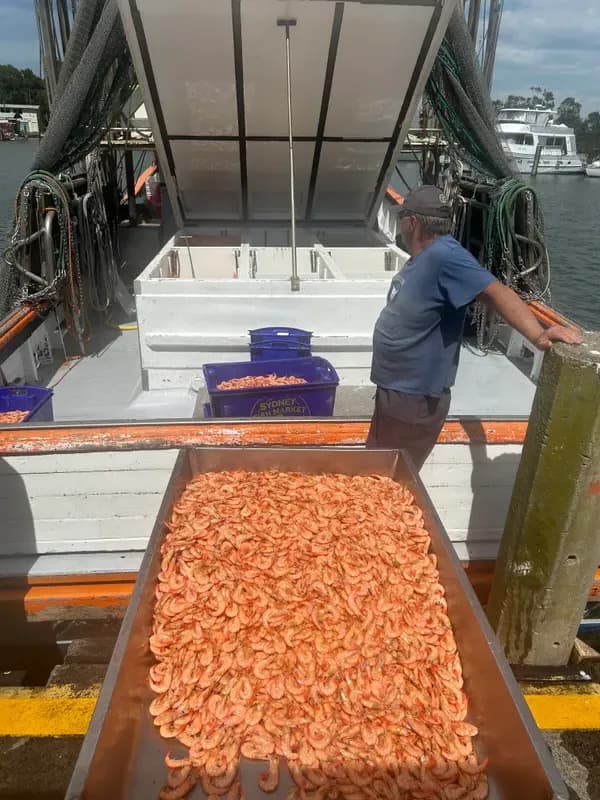
Wild-caught and farmed seafood are often positioned as opposites, but the sustainability of either depends on how it is managed, not the category itself. Queensland east coast prawns harvested by licensed trawlers under AFMA catch limits are a well-managed wild fishery. Atlantic salmon farmed in Tasmanian sea cages meets strong environmental standards and is independently assessed by the Aquaculture Stewardship Council. Oysters farmed in NSW and Queensland estuaries actually improve water quality by filtering bacteria and excess nutrients.
The species to scrutinise are not the common Australian table fish but imported product, particularly prawns and fish from some Asian aquaculture systems where antibiotic use and effluent management standards differ substantially from Australian requirements. The question worth asking is not just "wild or farmed" but "where was this caught or grown, and under what regulatory framework?"
MSC Certification and What It Tells You
Marine Stewardship Council (MSC) certification is the most internationally recognised sustainability credential for wild-caught seafood. Australian MSC-certified fisheries include Southern Rock Lobster, Western Rock Lobster, and several tuna fisheries. Demand for MSC-labelled product in Australia has grown significantly. The MSC reported a 35% increase in certified Australian product between 2022 and 2025.
MSC certification is useful but not the only signal. Many well-managed Australian fisheries have not pursued certification due to cost, not because of sustainability concerns. The ABARES Status of Australian Fish Stocks report is the more comprehensive reference for Australian buyers: it assesses over 400 species and is freely available at fish.gov.au.
The Tasman Star Approach
Tasman Star operates its own commercial trawler fleet off the Gold Coast and Northern NSW coast. Vertical ownership of the supply chain, from catch to retail counter, means the provenance question has a concrete answer. The fish at the Labrador store (5–7 Olsen Ave) and the Varsity Lakes flagship (20 Casua Dr) came off boats Tasman Star owns, operating under AFMA and Queensland Fisheries licensing, within catch limits set by ABARES-informed quota management.
Supply chain length is the variable most consumers overlook. Supermarket seafood may have passed through four or five intermediaries across multiple countries before it reaches a display case. A shorter chain means fewer handling stages, lower bacterial load risk, and a fresher product, independent of any certification status.
Making Informed Choices Without Overwhelm
You do not need to memorise certification schemes. Three practical questions cover most of it: Where was this caught or farmed? Is it Australian-regulated? Who is the supplier, and do they own any part of the supply chain?
Rotating species also matters. Buying only salmon and prawns every week concentrates purchasing pressure on two fisheries. Adding barramundi, snapper, flathead, and oysters to the rotation spreads demand across a broader base, which is exactly what Seafood Industry Australia recommends to consumers making sustainability-conscious choices.
Learn about Tasman Star's fishing fleet and how your seafood reaches the counter.
Written by
The Tasman Star Team · Gold Coast fishmongers
Articles from the fishmongers at Tasman Star Seafood. We source, fillet and sell fresh seafood on the Gold Coast seven days a week, sharing seafood buying guides, cooking ideas and practical information for our customers.
Fresh seafood delivered to your door
Order online from Tasman Star Seafood, Gold Coast delivery Monday to Saturday.
More Seafood Articles
How to Build a Seafood Platter for 2, 4, 6, 10 or 20 People
Seafood platter quantities that actually work: grams per person, a shopping list for 2 to 20 guests, and how a $200 Father's Day spend unlocks free merch online or in store.
GuidesIs Flake Shark? What Australian Fish and Chip Shops Actually Sell
Yes. Flake is shark, usually gummy shark. It is mild, boneless and common in fish and chips. Here is the species table, the mercury note, and what to cook instead.
GuidesWhat Is Mullet Roe? Bottarga, Fresh Roe and How Australians Eat It
Mullet roe is the egg sack of sea mullet. Fresh, it fries crisp. Cured, it is bottarga. Same fish as Mediterranean grey mullet. A Gold Coast guide to buying, curing and cooking it.